Custom Soccer Jersey Trends Teams Want Now
A soccer uniform has about five seconds to make an impression at kickoff. That is why custom soccer jersey trends are no longer just about picking a team color and adding numbers. Clubs, schools, and recreational teams are using their kits to look organized, build pride, and create a design players actually want to wear long after the final whistle.
The strongest looks right now balance personality with clarity. A jersey needs to stand out from the sideline, keep numbers readable for referees, and give every player a polished, united appearance. The best trend for your team is not always the loudest one. It is the one that fits your identity, budget, league rules, and timeline.
Custom Soccer Jersey Trends That Are Leading the Field
Bold sublimation is replacing basic stock patterns
Sublimated jerseys continue to lead because they give teams far more control over the final look. Instead of applying a logo or stripe on top of a blank shirt, sublimation builds colors, graphics, names, numbers, and details directly into the fabric. The result is a cleaner finish with no heavy layers peeling or cracking during a long season.
Teams are using this freedom for tonal patterns, geometric panels, city-inspired textures, lightning effects, and custom gradients. A navy jersey can carry a subtle tonal wave pattern. A red-and-black club can create sharp diagonal movement without making the uniform hard to read. These details look premium from close range while still reading as a strong team kit from across the field.
The practical advantage matters just as much. Sublimation helps teams match their exact colors across jerseys, goalie kits, tracksuits, and sideline apparel. For programs building a recognizable brand, that consistency is worth more than a one-season design.
Retro soccer details are coming back with a modern fit
Classic soccer style is having a real return. Think clean stripes, color-blocked shoulders, contrast collars, simple chest bands, and badge-inspired graphics. The difference is that current retro-inspired kits are built with modern lightweight performance fabric and current sizing.
This trend works especially well for school programs, long-running clubs, alumni events, and teams with established colors. A traditional vertical stripe or a classic white collar can make a new uniform feel connected to the history of the program. It also gives organizers a look that ages well. Trend-heavy graphics can be exciting, but a clean retro base often stays relevant for multiple seasons.
There is a trade-off. Too many old-school elements can make a jersey look dated rather than intentional. Keep the layout focused: use the stripe, collar, or crest style as the statement, then let the logo and player number stay clean.
Gradient color fades add energy without clutter
Gradients are one of the most requested custom soccer jersey trends because they create movement without requiring a busy all-over graphic. Teams are shifting from one strong color into another, often from dark at the bottom to bright at the shoulders, or from one club color to its secondary accent.
A well-planned gradient can make a basic color combination look custom immediately. It is particularly effective for youth academies, travel teams, and tournament squads that want a modern visual edge. Gradients also pair well with subtle line patterns or faded texture in the background.
The key is contrast. If the transition is too close in color, it may disappear from a distance. If it is too aggressive, it can compete with the logo and numbers. Ask for a mockup that shows the full front and back before approving production. That is the fastest way to check whether names and numbers remain easy to read.
Meaningful details are replacing generic graphics
The best jersey designs now include details that mean something to the people wearing them. A local skyline, school initials, founding year, club motto, state outline, neighborhood reference, or mascot pattern can turn a uniform into a real piece of team identity.
These elements do not need to dominate the jersey. A small phrase inside the collar, a faded map texture, or a founding year near the lower hem can add character without taking over the design. For competitive clubs, an embroidered patch can bring another premium touch to travel gear or off-field polos.
This is where custom design beats a catalog uniform. Your team should not look like it borrowed a template from every other league. When players recognize their story in the kit, they wear it differently.
Design for Match Day, Not Just the Mockup
A great digital design still has to work under stadium lights, in bright sun, and from the far side of the field. Start with the information that must be visible: player number, team name if required, and logo placement. Then build the creative elements around it.
High-contrast numbers are essential. A dark number on a dark gradient or a white number over a pale section may look acceptable on a phone screen but become difficult to read during a game. Make sure the back panel provides a clear number zone. This is especially important for leagues with specific numbering rules.
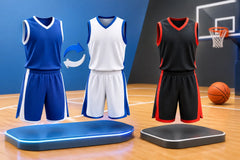
Also consider your opponent and your goalkeeper. Home and away kits should be clearly different enough to prevent color conflicts. Goalies need their own distinct look, but their kit can still carry the same visual language as the field-player jersey. Matching patterns, trim colors, or a shared club badge create a complete professional appearance.
Build a Full Team Look Around the Jersey
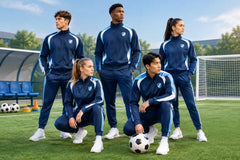
The jersey is the centerpiece, but organized teams are thinking beyond one shirt. Coordinated shorts and socks create a complete match-day uniform. Warm-up tracksuits, hoodies, polos, and travel gear extend the team identity to tournaments, arrivals, and community events.
This does not mean every item needs the exact same busy artwork. In fact, simpler is often better for off-field apparel. A clean club logo on a polo, a small player number on a hoodie, or a bold team name on a tracksuit can complement the jersey without repeating every visual element.
For larger orders, plan the collection as one system. Use the same core colors, logo files, fonts, and badge treatment across every item. This helps new players, coaches, and supporters join the look later without creating a mismatched sideline.
What Smart Team Buyers Are Prioritizing
Design matters, but practical ordering decisions still win seasons. Coaches and managers are looking for US sizing, clear size charts, team discounts, reliable turnaround times, and direct help when details need to change. A low price is only a good deal if the uniforms arrive correctly, fit the roster, and hold up through repeated wear.
Before finalizing an order, confirm your roster spelling, player numbers, logo quality, and required delivery date. Give extra attention to names with hyphens, apostrophes, and uncommon spelling. Once personalized uniforms move into production, correcting one detail can slow down the entire team order.
A free mockup is valuable because it turns ideas into something the coaching staff can approve. Review it with more than one person. The head coach may focus on club identity, while a manager may catch a number issue or a color concern. That quick review can prevent expensive surprises.
At RRR Sports America, teams can use custom sublimation to combine modern graphics, classic club style, names, numbers, logos, and coordinated apparel without losing sight of affordability and speed. The goal is simple: give your roster a uniform that looks ready for competition.
Choose a Trend Your Team Can Own
The right design does not have to follow every trend on the field. A clean striped kit may be perfect for one club, while a bold gradient and custom pattern may better fit another. Start with what makes your team recognizable, then choose details that improve that identity instead of distracting from it.
Bring your colors, logo, roster, and deadline into the conversation early. When the design is built around the team rather than forced onto a template, the finished jersey becomes more than game-day apparel. It becomes the look players remember when they talk about the season.