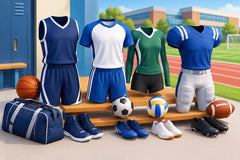
School Uniform Guide for Athletic Programs
A school uniform guide should do more than help you pick a jersey color. For athletic directors, coaches, and team managers, the right uniforms create a recognizable program, help players feel prepared, and make game-day operations easier. The wrong order can mean inconsistent shades, missing sizes, uncomfortable players, or gear that looks tired halfway through the season.
For school sports, uniforms need to work harder than everyday apparel. They must represent the school, meet league rules, handle repeated washing, and fit a wide range of athletes. Start with the program's real needs, then build a coordinated look that players are proud to wear.
Start With Your Sport and Season Needs
A soccer kit has different requirements than a basketball uniform, volleyball jersey, or track warmup. Before choosing a design, think about where and how the gear will be used. Outdoor sports need breathable fabrics that can manage heat, sweat, rain, and frequent use. Indoor teams may prioritize lightweight movement, stretch, and high-contrast numbers that are easy for officials to read.
Also consider the full season, not only the first game. A school team may need home and away uniforms, practice shirts, goalkeeper kits, warmups, coaching polos, and hoodies for travel. Ordering each item separately can create mismatched colors and unnecessary reorders. A coordinated package gives the program a more polished appearance while making ordering simpler.
For growing programs, leave room for midseason additions. New players, replacement jerseys, and playoff rosters happen. Choose a supplier that can retain your design details, school colors, logos, and numbering format so later orders still match the original set.
Build a School Uniform Look Players Recognize
Strong school uniforms are easy to identify from across the field or court. That does not mean every detail needs to be loud. In fact, the best designs usually begin with a clear foundation: official school colors, a visible mascot or logo, readable numbers, and one consistent type style.
Use your main school color as the dominant shade, then add a secondary color for contrast. If your school colors are dark, make sure numbers and names use a light color that stands out. If the main jersey is light, use a dark number treatment with a clean outline when needed. Contrast is not just a design choice. It helps coaches, scorekeepers, fans, and officials identify players quickly.
Sublimated uniforms give schools more design flexibility because colors, patterns, names, numbers, and graphics are built into the fabric rather than added as a heavy layer. This works especially well for bold stripes, gradients, geometric panels, mascot details, and sleeve graphics. It also helps teams create a premium look without relying on expensive add-ons for every piece.
Keep one rule in mind: the uniform should look good in motion. A graphic that looks sharp on a digital mockup may become busy when players are running, sweating, and viewed from a distance. Ask for a free mockup before production and check the front, back, sleeves, shorts, and number placement as a complete set.
Put Readability Before Extra Decoration
A large logo is not always better. If it pushes the player number into an awkward spot or makes the jersey hard to read, simplify the layout. The player number should remain clear, especially in sports with league requirements for number size and placement.
Be careful with dark-on-dark combinations, thin fonts, and overly detailed mascot artwork. Fine lines can disappear from the stands. A clean athletic typeface and high-contrast numbering usually deliver a stronger game-day result than an overdesigned jersey.
Choose Fabrics That Hold Up to School Schedules
Student athletes put uniforms through a lot. They wear them for games, tournaments, travel, team photos, and sometimes back-to-back events. A low-quality uniform may save money upfront but cost more when colors fade, seams fail, or replacements become necessary.
For most athletic programs, moisture-wicking performance polyester is a practical choice. It is lightweight, durable, and designed to dry faster than cotton. Mesh panels or ventilated fabric can add comfort in high-heat sports, while slightly heavier options may make sense for cold-weather training gear and tracksuits.
Fit matters just as much as fabric. Schools need a size run that works for youth, adult, and plus-size athletes. Avoid guessing based on a player's everyday clothing size. Use the supplier's sizing chart, collect measurements early, and have players confirm their selections before the order is finalized. This small step prevents a common problem: a uniform that looks great but restricts movement or hangs too loose during competition.
A good team order can include a few extra blank or numbered pieces in the most common sizes. That is especially useful for programs with tryouts, late registrations, or athletes moving up from junior varsity to varsity.
Plan the Order Timeline Backward
Uniform deadlines are rarely flexible. Your first match, tournament, picture day, and league roster submission date can all affect when the apparel must arrive. Work backward from the first required wear date, allowing time for design approval, roster collection, sizing, production, shipping, and a final check when the order arrives.
Do not wait until the final week to gather player names and numbers. Duplicate numbers, misspelled names, and incomplete rosters slow down production. Assign one person to collect and verify the final information. A simple spreadsheet with player name, jersey number, size, and preferred spelling can prevent costly mistakes.
A fast turnaround is valuable, but accuracy comes first. Review the mockup carefully before approving it. Check the school name, mascot, logo orientation, color shades, number style, and every player detail. Once custom production starts, changes can be difficult or impossible.
RRR Sports America supports custom team orders with free mockups, US sizing, team pricing, and a stated 15-day turnaround, helping programs move from design approval to game-ready apparel without unnecessary delays.
Set a Budget That Covers the Full Uniform System
The lowest jersey price does not always create the best value. Consider what is included in the quote: customization, player names, numbers, shorts, socks, artwork setup, shipping, and replacement options. A complete quote makes it easier to compare suppliers and avoid unexpected costs later.
Schools and booster clubs often need to balance appearance with affordability. One way to control the budget is to invest in a durable core uniform, then add optional fanwear or travel gear separately. Players may need the required game kit, while families can choose to purchase hoodies, polos, backpacks, or supporter apparel based on interest.
For multi-team programs, order strategically. Combining varsity, junior varsity, middle school, and recreational league needs may qualify the program for bulk or wholesale pricing. At the same time, do not combine orders if different teams have different deadlines. Saving a little on unit cost is not helpful if one team misses its opening game.
Create Consistency Beyond the Game Jersey
A coordinated school program looks organized before athletes ever step onto the field. Matching warmups, coach polos, sideline hoodies, and travel shirts reinforce the same identity as the game uniform. They also give staff and athletes practical layers for changing conditions.
You do not need every item to match exactly. A clean system often uses the same color palette and logo treatment across different products. For example, the game jersey may feature a bold sublimated pattern, while the travel polo uses a simpler embroidered logo. The connection should be visible without making every piece identical.
This is also a smart way to recognize sponsors, championships, or special events. A discreet sleeve patch, tournament tagline, or anniversary mark can add meaning to a season without taking attention away from the school name and player number.
Final Checks Before You Approve Production
Before you send the final approval, confirm four areas with the coach, athletic director, and team representative: the design, roster details, sizing totals, and delivery date. Make sure the home and away color choices meet league expectations, especially when opponents may have similar colors.
Then inspect the order as soon as it arrives. Count every item, compare names and numbers to the roster, and have players try on their uniforms before the first competition. If an issue appears, early notice gives everyone more time to solve it.
The best school uniforms make athletes feel like they belong to something bigger than a single game. Give your team a design they can recognize instantly, a fit they can trust, and gear that is ready when the season starts.